Backed by Combinator

A sensor knows the machine.
Your plant data knows the situation.

Predictive Intelligence: machine health judged against what the plant was doing

Most condition monitoring
never sees your plant.

Its own sensors, its own login, and no idea what the rest of the plant was doing.

Nothing works until hardware ships

The trial needs budget approval before it can prove it deserves one.

A fault and a busy week look the same

Vibration went up. Worn bearing, or a heavier product that week? A sensor alone can't tell, so it flags both.

Alerts nobody trusts

Enough warnings nobody can explain and people stop opening them. That is what kills these programs.

Some faults are already in your tags.
Others need a sensor.

From tags you already have

Motor load and power factor drift, temperature above ambient, pump curves falling off, filters loading, cycle times creeping. Your historian has been recording them for years.

From a wireless sensor

Worn bearings, gear wear, dry lubrication, looseness, cavitation. These only show up in high-frequency vibration and ultrasound, which a historian never samples fast enough to catch.

From both

Every sensor finding is judged against load, speed, ambient, and what ran next to it. A machine wearing out stops looking like a machine working hard.

Point it at what you already run.

  • Historians and SCADA: AVEVA PI, Ignition, and the rest.
  • Straight from equipment: OPC UA and MQTT with Sparkplug B.
  • Databases and APIs: PostgreSQL, MySQL, InfluxDB, Prometheus, REST.
  • Read-only, always: never writes back. Your cloud, or fully on-prem.
WHAT YOU ALREADY RUNPLCsSensors & I/OAVEVA PIIgnitionDatabases & APIsControl Seat

One box. Every sensor in range.

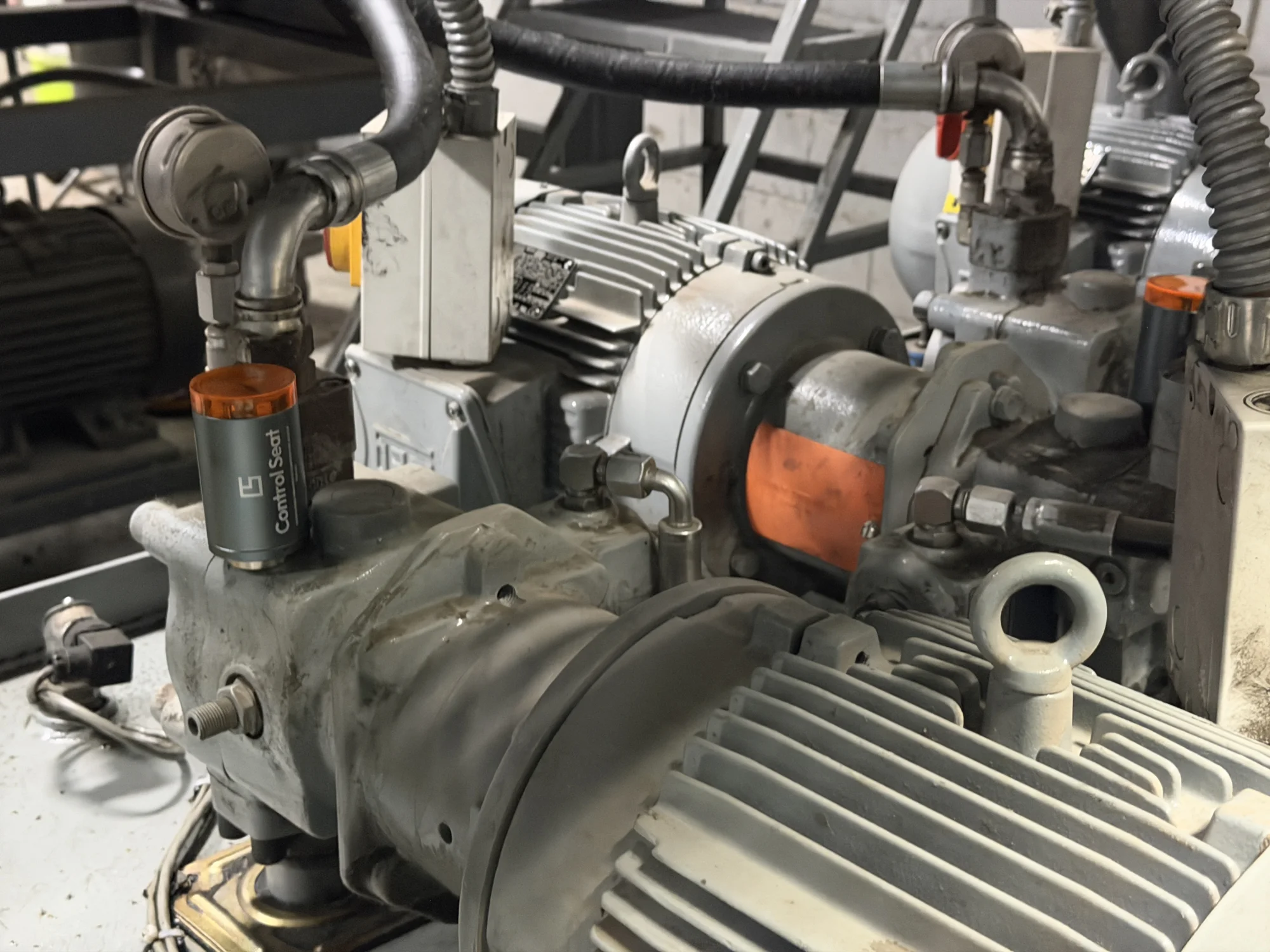
Sensors are found automatically. Assign one to a machine and its readings arrive as ordinary tags, next to your historian data.

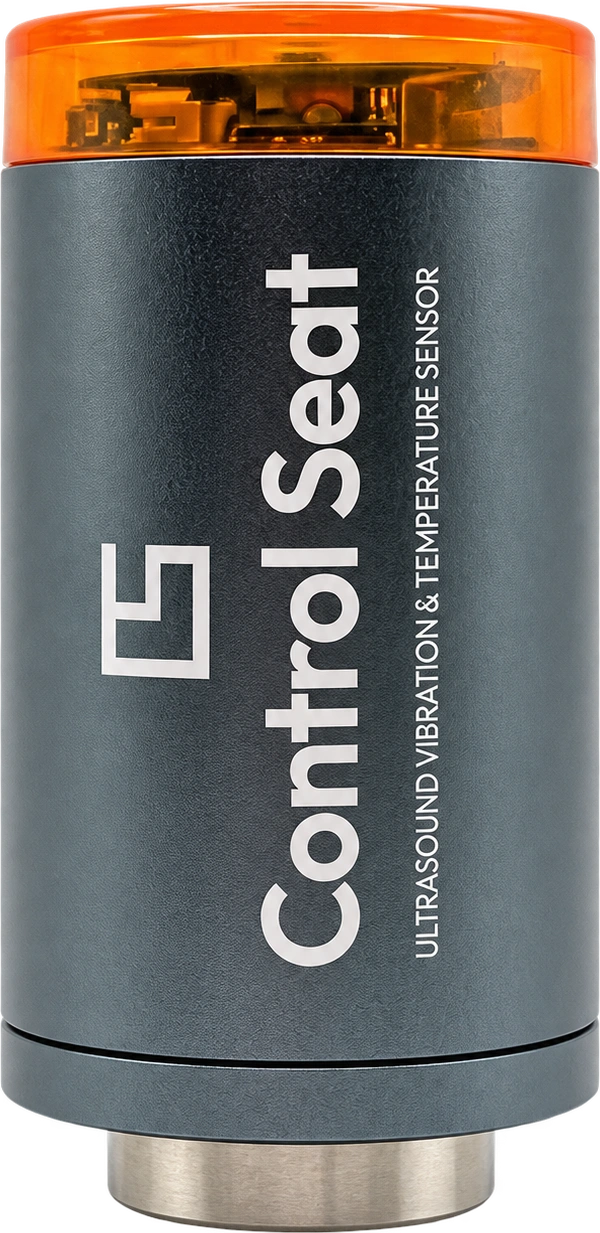
  • Vibration, ultrasound, temperature: ±16 g or ±64 g, three axes to 25.6 kHz. Ultrasound to 82 kHz. 8,100 raw samples per axis.
  • Built for the floor: IP67, 84 x 50 mm, magnet or 1/4-28 stud, 5 years on a swappable D-cell.
  • 900 MHz mesh: 2 miles line of sight, 1,000 ft indoors.
The Control Seat wireless vibration, ultrasound and temperature sensor

It learns what normal is, then names what changed.

Every machine gets a baseline from how it actually runs, not a threshold somebody guessed at.

  • Names the fault: bearing wear, unbalance, misalignment, gear mesh, cavitation, filter loading, valve drift, phase imbalance.
  • Spots the unusual: odd readings and sudden shifts, automatically.
  • Shows where it's heading: the trend projected forward, with confidence bands.
MACHINE HEALTHVIBRATION mm/sLEARNED NORMALALERT 7.1 mm/snowabout 4 weeksBearing wearSIGNATURE · ADVISORY

See the fault and the shift that caused it.

  • Synced charts: machine health and process data on one timeline.
  • Highlight what matters: mark the windows you care about.
  • Worksheets and journal: save an investigation, come back to it.
  • Dashboards and alerts: route findings where your team already looks.
VIBRATION mm/sMOTOR LOAD %VibrationMotor loadheavier product runWorking harder

Most plants don't have a vibration analyst.

  • Ask in plain language: did pump 3 run hot last week? No query needed.
  • Faster root cause: correlated tags and anomalies in seconds, not hours.
  • Answer to dashboard: in one step.
Is pump 3 vibration a fault, or just load?AI ANALYSISno faultLoad rose 22%. Vibration tracks it.VibrationMotor load

Findings you can actually check.

A verdict nobody can check is a verdict nobody acts on.

Every finding names its basis

A published limit, a frequency that points to one specific part, or a change from how this machine normally runs.

Weak evidence stays advisory

Nothing gets promoted to urgent because a number happened to be large.

No finding is a diagnosis

It's a ranked hypothesis with its evidence attached. New sensors page nobody until you've checked their work.

Not just the machines that spin.

Most condition monitoring is one accelerometer on one motor. We read your tags, and add sensors for vibration, pressure, flow, current, and temperature.

Rotating

Bearing wear, unbalance, misalignment, gear mesh. Motors, pumps, fans, gearboxes.

Fluid and process

Pump curve degradation, filter loading, heat exchanger fouling, valve stroke drift, leaks.

Electrical

Motors drawing power differently, unbalanced phases, panels running hot.

Custom

Any tag you log. Tell us what bad looks like and we'll build the model.

Manufacturing · Process and utilities · Energy and renewables · Water and wastewater · Aerospace · Buildings and facilities

Find out what your machines
are already telling you.

Tell us what you run and where the downtime hurts.

Talk to us
Request a demo