Start with the cost of a preventable equipment problem. Compare the downtime and emergency work you could avoid with the full cost of monitoring and responding to findings.
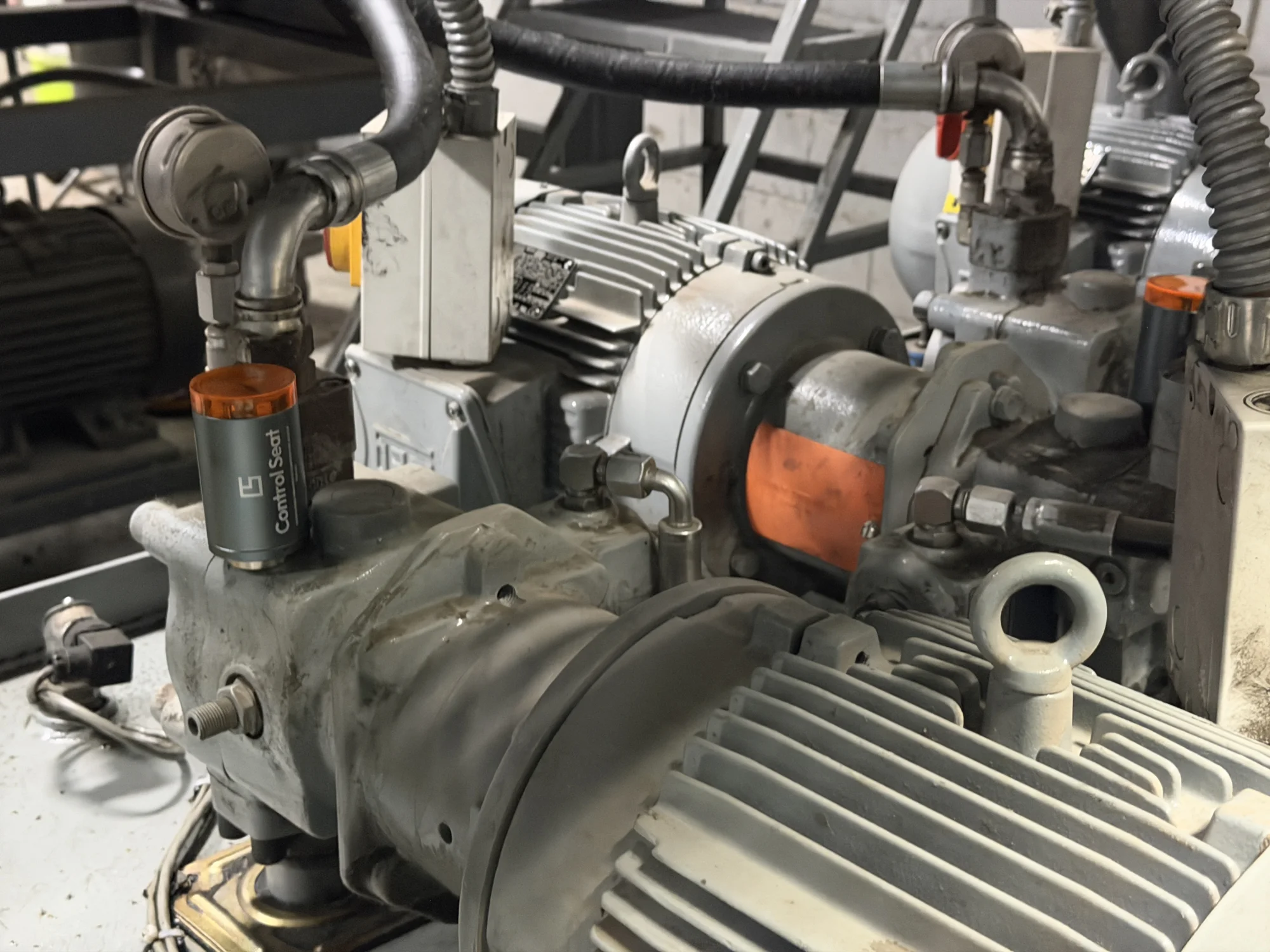
Control Seat sensor installed at Precision Associates, Inc.Independent research
There is evidence for the approach.
These findings describe maintenance programs across other organizations. They provide context for an investment decision; they are not results from Control Seat deployments.
8–12%
Estimated maintenance-cost savings over preventive maintenance alone
Pacific Northwest National Laboratory cites this range from earlier studies of functioning predictive maintenance programs. It is guidance about a complete maintenance program, rather than a savings estimate for a particular sensor or software product.
Less unplanned downtime in the group using more predictive maintenance
A 2021 NIST study compared manufacturers relying more on predictive maintenance with those relying more on preventive maintenance, after excluding the most reactive group. The survey covered 71 establishments. The association does not prove monitoring caused the difference or predict a result for your plant.
The starting maintenance program, equipment condition, failure modes, and response to findings all affect the outcome. Neither source evaluated Control Seat. Use your own costs and a focused deployment to assess the return.
Where the value comes from
Count the costs you can actually avoid.
Cost
What to include
Lost production
Lost contribution margin during an unexpected stop. Account for production you can recover later and any planned downtime needed for the repair.
Emergency repair premium
The extra cost of overtime, expedited parts, or outside service compared with a planned repair. Do not count the whole repair as avoided if it is still needed.
Scrap and spoilage
Product actually lost because of an equipment issue, such as interrupted production or a refrigeration failure. Avoid counting the same loss in downtime costs.
Monitoring and response
Sensors, gateways, installation, software, connectivity, training, review time, and additional planned work. Include these in the investment, not just the hardware price.
Your equipment. Your assumptions.
A simple ROI estimate.
Replace the example values with estimates for the equipment you would monitor. Count only downtime and costs that earlier detection could realistically help avoid.
Estimate from your assumptions
Annual gross benefit
$24,000
First-year net benefit
$15,000
First-year return on investment
167%
Simple payback on setup cost
2 months
First-year net benefit subtracts setup and a full year of monitoring costs. Payback assumes benefits and recurring costs accrue evenly through the year.
The starting numbers are a hypothetical example, not a Control Seat quote or a customer result. This is a simple estimate before tax and financing; it does not discount future cash flows.
How the estimate works Annual benefit = avoided downtime hours × cost per hour + other avoided costs. First-year ROI = (annual benefit − annual monitoring cost − setup cost) ÷ (annual monitoring cost + setup cost). Simple payback = setup cost ÷ (annual benefit − annual monitoring cost), converted to months.
Try a cautious case with fewer hours avoided, and a case with no avoided downtime. A positive estimate is a reason to investigate the investment, not evidence that the savings have happened.
Measure it in your operation
Start with a deployment you can evaluate.
01
Record the baseline.
Choose critical assets and document recent downtime, emergency repair premiums, and production losses. Agree how the team will record findings and actions.
02
Track the response.
For each finding, record the measurements, inspection, action taken, and confirmed issue. Track false alarms and the time spent reviewing them.
03
Review the economics.
Compare actual monitoring costs and documented outcomes with the baseline. Label avoided-failure estimates as estimates and avoid assigning every improvement to monitoring.
Our deployment at Precision Associates Control Seat sensors are deployed across critical manufacturing equipment at PAI. Our deployment article describes the installation and monitoring. We have not published measured downtime savings or an ROI result for that deployment. Read the deployment story