Introducing
Predictive Intelligence
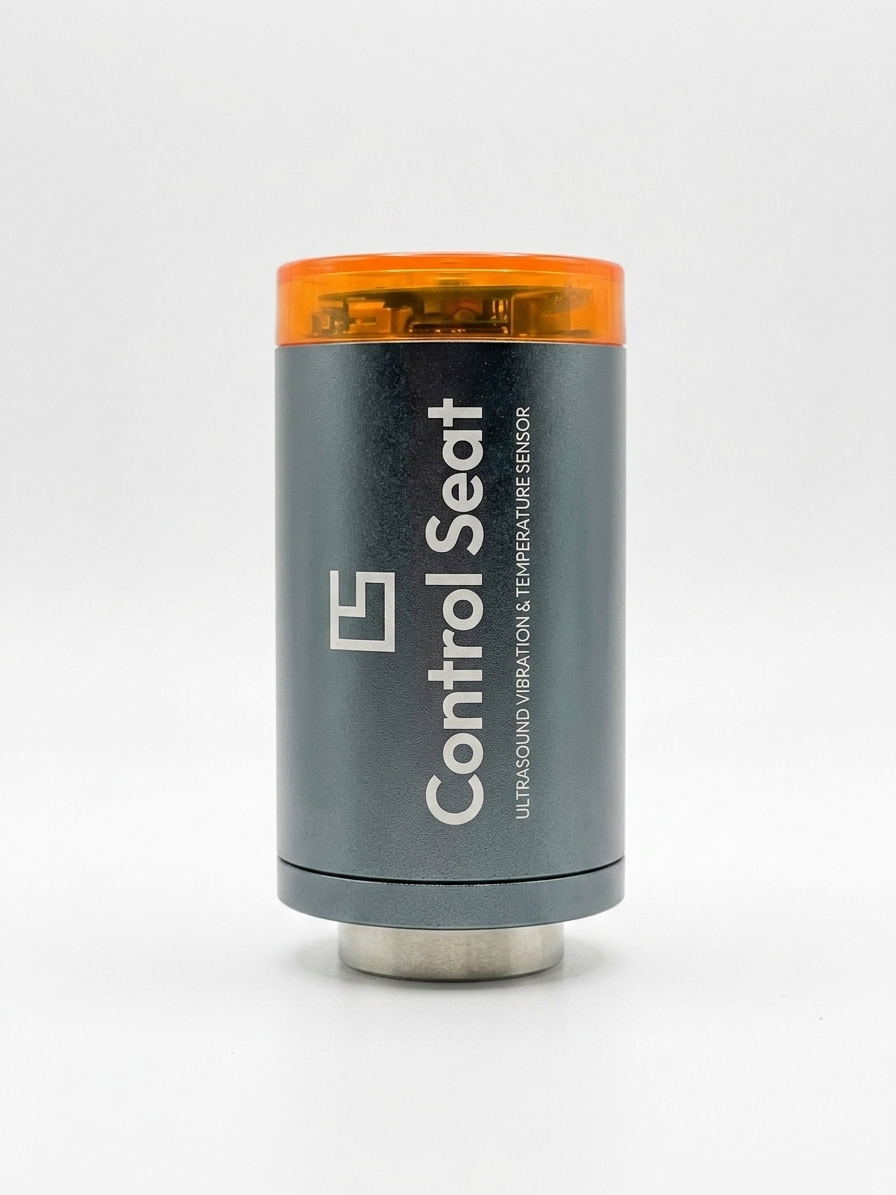
Predictive Intelligence brings equipment health monitoring into FactoryOS. Start with wireless sensors, readings from existing plant systems, or both. Connecting a PLC, SCADA system, or historian is optional.
Monitor more than motors
FactoryOS monitors rotating equipment, fluid and process systems, and electrical assets. That includes motors, pumps, and fans, as well as valves, filters, heat exchangers, panels, and transformers. Choose the measurements that suit each asset, or build monitoring around your own equipment.
Choose how you connect
For a sensor-based setup, wireless vibration, ultrasound, and temperature sensors report through a gateway to FactoryOS. You can monitor equipment this way without connecting to other plant systems.
You can also start with data you already collect. Connect readings such as current, power factor, temperature, pressure, flow, and speed from a PLC, SCADA system, or historian.
Use either approach on its own, or combine them. When operating data is available alongside sensor readings, your team can compare a change in equipment health with changes in load, speed, or process conditions.
See the measurements behind a finding
The sensors capture three-axis vibration with full spectrum detail, ultrasound, and temperature. FactoryOS learns how equipment normally runs and looks for changes that may indicate a developing issue.
Findings can point to issues such as bearing wear, imbalance, misalignment, gear mesh problems, cavitation, filter loading, valve drift, or phase imbalance, depending on the equipment and measurements available. Your team can review the evidence and ask questions in plain language before deciding what to inspect.
Wireless sensing
The sensors form a wireless mesh and report through a gateway. Range is about two miles with line of sight and 1,000 feet indoors, and the network grows as you add assets.
Each sensor runs up to five years on a replaceable battery. Its sealed aluminum housing mounts magnetically to the machine.
Get started
Talk to our team about the equipment you want to monitor. We’ll help you choose a starting setup. Explore Predictive Intelligence to learn about equipment coverage, wireless sensors, and condition monitoring.
— Jack & Warren